Seoul vs. Busan vs. Daegu for medical travel
Three cities market themselves to foreign patients. How they differ in getting there, language support, choice of providers and daily cost, a method for working out when a cheaper quote outside Seoul really is cheaper, and the cases where leaving Seoul is a poor idea.
Planning default10 nightsCost it out →
On this page (6 sections)
Most foreign patients go to Seoul because most providers are there. Busan and Daegu both have university hospitals, clinic districts and city-run medical tourism offices, and both sometimes quote lower. This page is about the trip around the treatment: how you get there and back, who can talk to you in your language, and how to work out whether a lower quote survives the extra travel. It says nothing about the quality of any clinic, which varies more within a city than between cities.
#Side by side
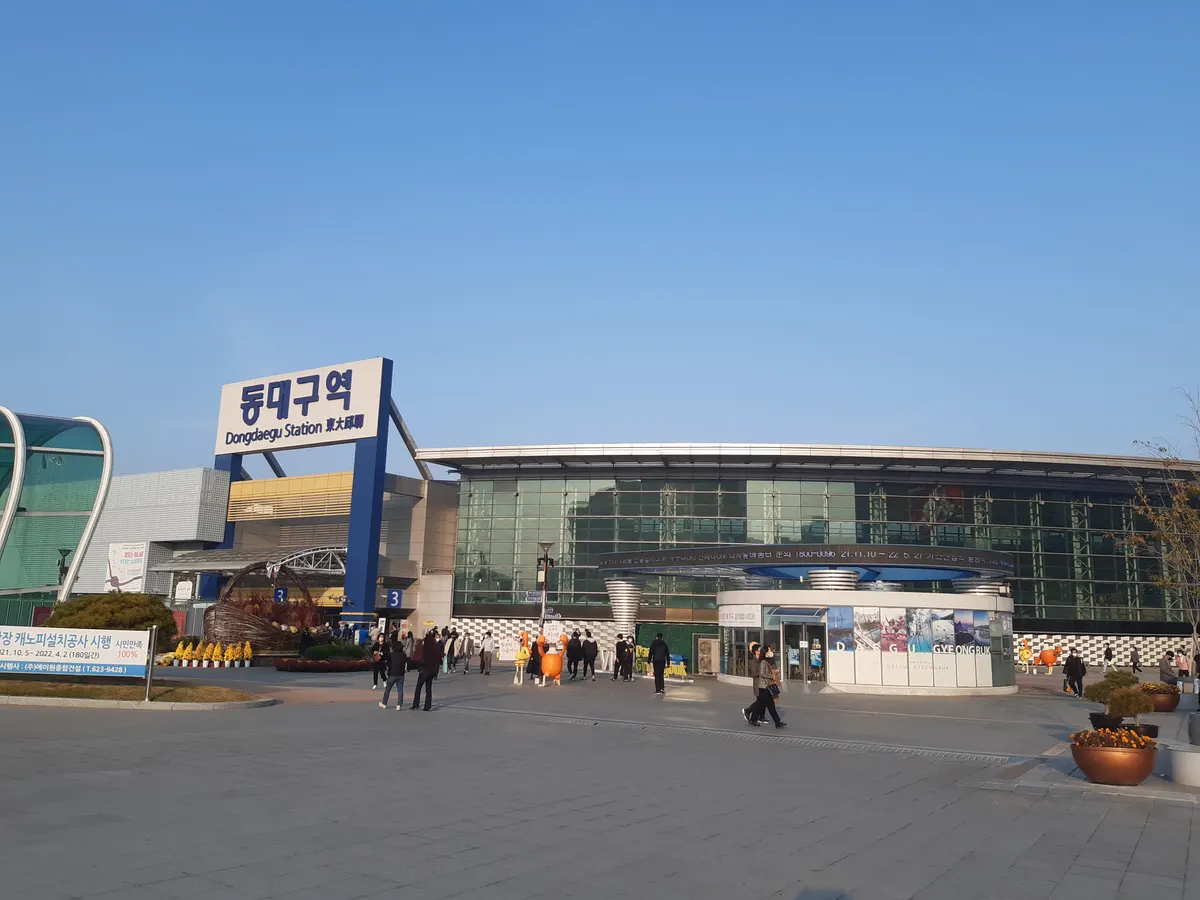
Facts taken from the official pages in the sources on 27 September 2026, except where a cell says to check for yourself.
| Seoul | Busan | Daegu | |
|---|---|---|---|
| Arriving from abroad | Incheon (ICN), the main international hub; the airport railroad runs to Seoul Station, and airport buses and taxis to the districts | Gimhae (PUS) has regional international routes and is inside the city: its light rail transfers to subway line 2 at Sasang and line 3 at Daejeo. Otherwise Incheon plus KTX or a domestic flight | Daegu (TAE) has limited international routes; most visitors come via Incheon or Gimhae plus rail to Dongdaegu |
| From Seoul by KTX | Not needed | Roughly two and a half to three hours to Busan Station | Under two hours to Dongdaegu |
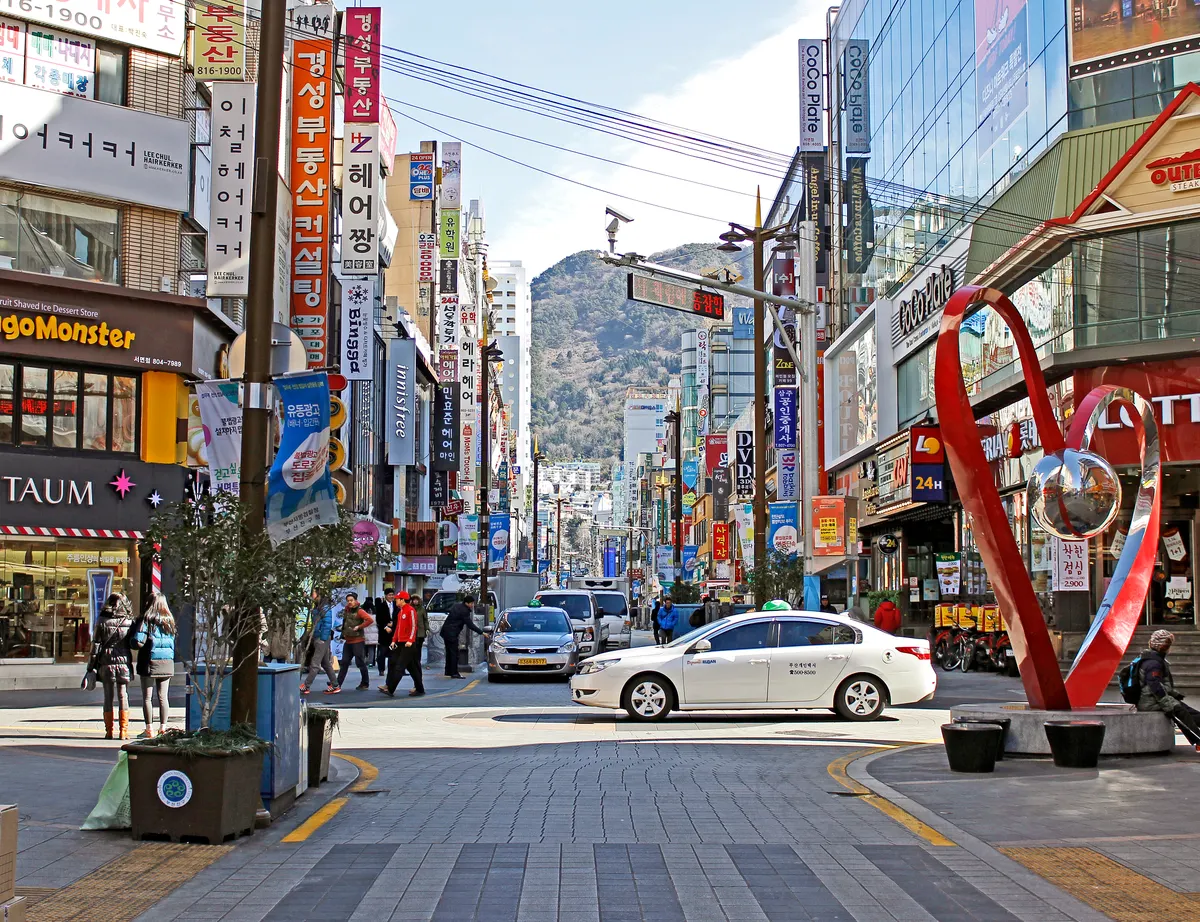
| Where providers cluster | Gangnam-gu for cosmetic work; university hospitals with international centres across the city | Seomyeon medical street; the city portal lists its medical institutions by specialty | City-centre clinic streets, and five general hospitals named on the city's English site, three of which describe an international medical centre |
| Language support you can verify in advance | In-house coordinators in many languages at large hospitals; English, Chinese, Japanese and Russian most common | The city portal runs in fifteen languages, including Russian, Mongolian, Kazakh and Vietnamese, with a real-time consultation chat; check the hospital itself for your language | The city publishes a directory of clinics with English-speaking staff by district, with phone numbers; the general hospitals' international centres name English |
| Hotels and daily cost | Highest, especially in Gangnam; prices swing by season and weekday | No published comparison. Take a real quote from a listing and use the method below | No published comparison. Take a real quote from a listing and use the method below |
| Walk-in help for medical travellers | Government Medical Korea Information Center desks at Seoul Station (Airport Railroad, level B2) and Incheon Airport Terminal 1 | City-run Busan Medical Tourism Information Center at Seomyeon Station exit 9 | No walk-in medical travel desk listed on the city's English site; use the hospital's international centre or the 1330 line |
| City help line | 02-120 (Dasan), with foreign-language consultation on weekdays | 051-120, plus the national 1330 line | The national 1330 line |
| Recovery surroundings | Dense, busy, everything delivered; taxis for the first days | Coast and beaches; milder winters | Compact and quiet; hot summers |
Verify before you rely on this: Flight routes, KTX journey times and fares change with timetables. Check current routes into Gimhae and Daegu airports from your country before assuming you can fly direct, and price the onward rail or domestic flight for every traveller in both directions; for two people it can cancel out a lower quote.
Verify before you rely on this: As of 27 September 2026: Visit Busan lists the Busan Medical Tourism Information Center at 787 Gaya-daero, Busanjin-gu (Seomyeon Station exit 9), open 09:00-18:00, telephone 051-818-1320, and the city's 120 line on 051-120. Medical Korea lists its Seoul Station desk as open daily 09:00-18:00 in English, Chinese, Japanese and Korean, and its Incheon Terminal 1 desk daily 09:00-21:00 with Russian added, on 1577-7129, and lists no desk in Busan or Daegu. Daegu city's English site names five general hospitals and describes an international medical centre at three of them, and separately publishes a directory of medical institutions with English-speaking staff. The Gimhae airport page shows the light rail transfers at Sasang and Daejeo. Seoul's 120 foreign-language hours come from a city notice dated 11 July 2023. None of these offices ranks clinics; use them for information and for checking that a provider is registered.
#Getting there, and getting back for the flight home
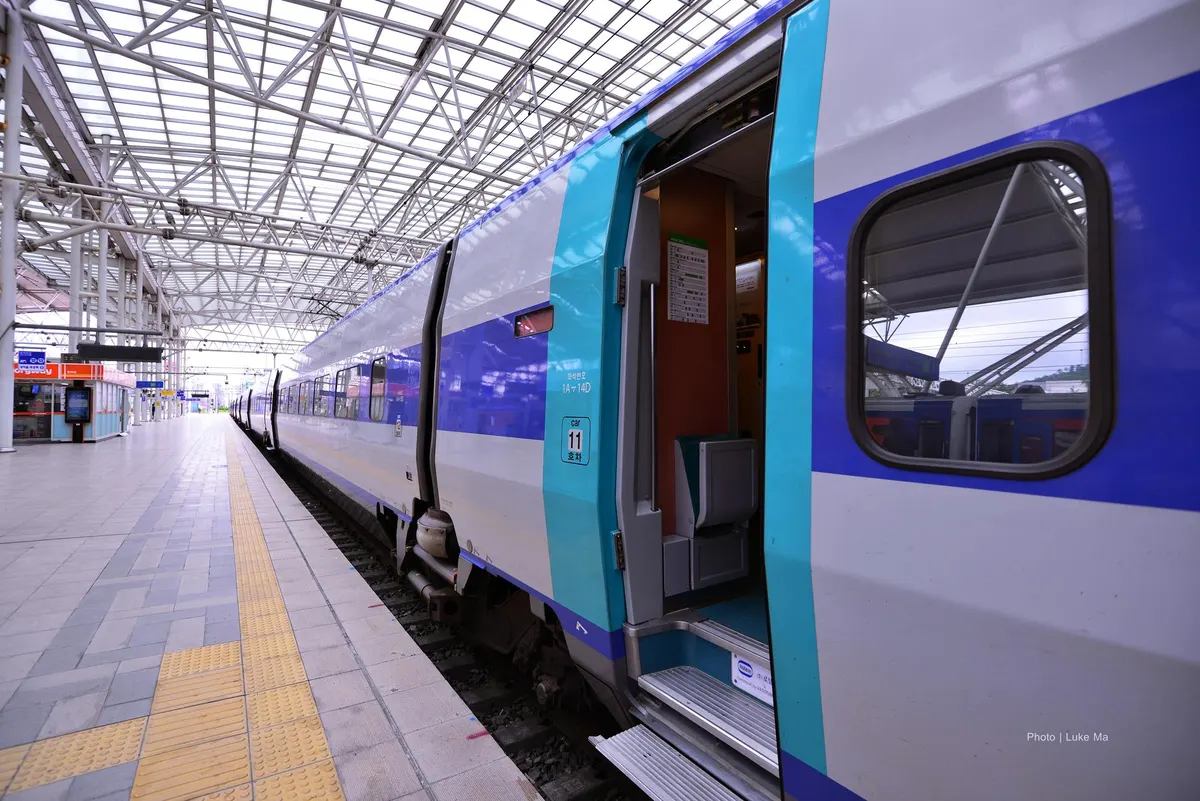
Almost every long-haul route lands at Incheon, so for most visitors Busan and Daegu add a leg to each end of the trip. On arrival that is a nuisance: the getting-around guide notes that Incheon Airport advises allowing one to two hours for immigration before booking onward transport, and the KTX to Busan or Dongdaegu leaves from Seoul Station, which is where the airport railroad ends. A morning landing therefore becomes an evening arrival in the treatment city, and a day is gone.
On departure the same leg matters more, because you make it after the procedure. Several hours in a train seat with a splint, a fresh wound or a swollen face, followed by the airport, is a different proposition from a taxi to Incheon. The stay-length comparison lists, for each procedure, the appointment that sets your departure; add the train to it and ask the clinic whether the journey is acceptable on that day. Travellers with a direct flight into Gimhae avoid the leg entirely, and for them Busan competes with Seoul on travel time rather than losing to it. Gimhae sits inside the city, with a light rail line that transfers to the subway at Sasang and Daejeo, so the hotel is reachable without a long transfer.
#Language support: what each city can show you before you book
The interpreters guide sets out the four moments where language matters: consent, the plan, the price and the discharge instructions. In Seoul, the international centres at large hospitals and the coordinators at clinics that market to a particular country cover those moments as a matter of routine, and less common languages such as Arabic, Mongolian and Vietnamese are available at some hospitals on set days. Outside Seoul the question has to be put to the specific institution, and the two cities give you different tools for doing that.
- Busan: the city's medical tourism portal is published in fifteen languages, among them Russian, Mongolian, Kazakh, Vietnamese, Thai and Indonesian, and offers a real-time consultation chat. That tells you the city office can answer in your language; it does not tell you the clinic can. Ask the clinic which language its coordinator speaks and on which days
- Daegu: the city's English site describes international medical centres at three of its five general hospitals, with English-speaking staff, and publishes a district-by-district directory of clinics with English-speaking staff and their phone numbers. For a language other than English, expect to arrange an interpreter
- Everywhere: the 1330 tourist helpline interprets over the phone for a taxi or a pharmacy counter, and it does not replace an interpreter in the consulting room. A hospital international centre is the only reliable source of in-room interpreting outside a clinic's own coordinator
#The cost of one more day: the method
The total cost calculator on this site adds the procedure quote, accommodation and food for the number of nights, flights, interpreter hours, and a percentage buffer. The same arithmetic, done twice, is how to compare a Seoul quote with a Busan or Daegu quote. No figures are given here; put in your own.
- Daily cost, D = your hotel rate plus your food and local transport per day, from a current listing in each city
- Nights, N = the planning number from the stay-length table for your procedure, the same in both cities, plus one extra night outside Seoul if the arrival leg turns a morning landing into an evening one
- Onward travel, T = the rail or domestic flight fare, times the number of travellers, times two for the return
- Interpreting, I = interpreter hours times the hourly rate, if the clinic outside Seoul has no coordinator in your language and the Seoul clinic does
- Total for each city = quote + N × D + T + I, plus the same buffer percentage on both
Written out, the quote outside Seoul is really cheaper only when the difference between the two quotes is larger than T plus I plus the extra nights times D, minus whatever the lower daily cost saves over the whole stay. Two things follow. First, the saving on daily cost is multiplied by N, so it counts for most on long stays: a fourteen-night contouring recovery or a two-week rehab course gives a lower nightly rate room to work, while a three-night checkup does not. Second, T and I are fixed costs that are paid whatever the stay length, and T is paid per person, so a companion doubles it. A worked example with your own numbers takes two minutes in the calculator; the link at the foot of this page opens it with ten nights already entered, and the share link lets you keep both versions side by side.
Practical note: KTX tickets can be booked in English through Korail's website or app, and seats sell out around Chuseok, Lunar New Year and summer weekends. If your follow-up appointment and your flight are in different cities, buy the rail ticket when you book the appointment, not on the day, and keep it changeable for the same reason the return fare should be: the last check-up is the date that moves.
#When not to leave Seoul
Some cases are decided before the arithmetic. Anything rare, complex or dependent on one sub-specialist belongs where the sub-specialists are, and that is overwhelmingly Seoul; the international-clinics article describes how a university hospital's centre triages a serious case, and the same process is thinner where there are fewer departments. A procedure whose recovery makes travel hard, such as rhinoplasty with a splint or facial contouring on a liquid diet, is a poor candidate for a three-hour train on the day before the flight. A short trip, where the stay-length table gives three to five nights, has no room for a lost travel day at each end. A less common language that only a Seoul hospital staffs settles the question on its own. And a complication that appears after you have moved back to Seoul for the flight home is a problem the treating clinic can no longer see; ask, before you book, how follow-up works in that case, and whether the clinic has an arrangement with a hospital in Seoul.
#Who each city suits
- Seoul: anything rare, complex or requiring a specific sub-specialist; anyone needing a less common language; short trips where a lost travel day matters; anyone travelling alone after surgery under general anaesthesia
- Busan: common procedures combined with a holiday; travellers from cities with a direct Gimhae flight; longer recoveries where daily cost matters and the method above comes out in Busan's favour
- Daegu: travellers already comfortable getting around Korea, comparing quotes for common procedures and wanting a quieter base; English speakers, given what the city publishes about language support
City medical tourism offices exist to promote their region. Their lists of registered institutions are useful for checking that a clinic is legally registered to treat foreign patients; they are not rankings, and a listing says nothing about the clinic's experience with your procedure. The red-flag checks on this site, the specialist count and the operating-room CCTV rule among them, apply in all three cities.
Work out the whole trip: open the total cost calculator with 10 nights filled in. That is a planning default, not a schedule — replace it with the dates your own clinic gives you.
Sources
- Medical Korea — foreign patient information portal
- Meditour Busan — Busan city medical tourism portal
- Daegu Metropolitan City — English site
- Daegu Metropolitan City — General hospitals (English)
- Daegu Metropolitan City — Medical institutions with foreign-language speaking staff (English)
- Korea Airports Corporation — Gimhae International Airport, public transportation (English)
- VisitKorea — Korea Tourism Organization
- Medical Korea — Information Center desks (Seoul Station, Incheon Airport)
- Visit Busan — Busan Medical Tourism Information Center (Seomyeon)
- Seoul Metropolitan Government — 120 Dasan foreign-language consultation (notice of 11 July 2023)
Update history
- 10 October 2026: Added photos of the KTX, Dongdaegu Station and Seomyeon.
Planning the trip? Tick off the trip checklist — what to get in writing, what to pack and which documents to collect before you fly home — and keep the Korean phrase cards on your phone for taxis and pharmacies.
This site is an information resource, not a medical provider, agency or broker. We do not arrange treatment, refer patients to specific hospitals, or receive commission from clinics for introductions. Nothing here is medical advice — decisions about treatment belong to you and a licensed doctor.