Where to stay near Seoul's main hospital and clinic districts
Gangnam and Sinsa for cosmetic clinics, Sinchon and Jongno for major hospitals: how the districts differ for a recovering patient, what to check in the listing, and the booking mistakes to avoid.
On this page (7 sections)
Choose accommodation after you know which clinic you are attending, never before. Seoul is large, and a thirty-minute subway ride that is pleasant on day one is a real obstacle on day two after surgery.
The rule that works for most patients: for the nights right after the procedure, stay within a short taxi ride or a flat ten-minute walk of the clinic. If you want a livelier neighbourhood or a cheaper room, move there for the second half of the trip, once the early follow-up visits are done.
#The districts, from a patient's point of view
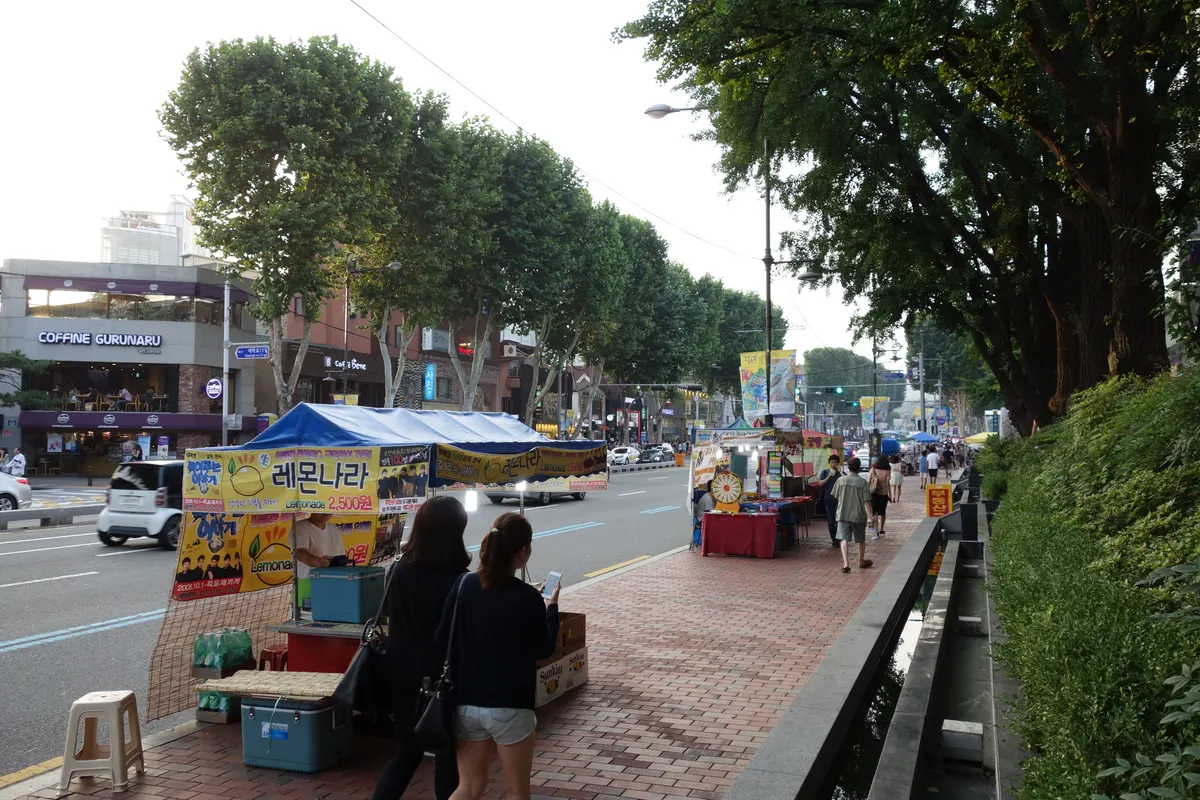
Orientation only. We do not list or recommend clinics in any district.
| Area | What is concentrated there | For a recovering patient |
|---|---|---|
| Gangnam station / Sinnonhyeon | Large numbers of cosmetic, dermatology and dental clinics | Busy, many hotels and serviced apartments at all price levels, heavy traffic at rush hour |
| Apgujeong / Cheongdam / Sinsa | Cosmetic surgery clinics, dermatology | Quieter streets, pricier; convenient if your clinic is there |
| Sinchon / Ewha | A major university hospital and surrounding clinics | Student area, cheaper accommodation, lively at night |
| Jongno / Hyehwa / Daehak-ro | Major university hospitals, traditional Korean medicine clinics | Central for sightseeing, older buildings; check for lifts |
| Around large hospitals elsewhere (e.g. Songpa, Seocho, Ilwon) | Big general hospitals with international centres | Often residential; serviced apartments near hospitals cater to long-stay patients and families |
Practical note: Gangnam is a district, not a point on the map. Gangnam-gu stretches from the river to the southern hills, and two addresses that both say Gangnam-gu can be several kilometres and a long rush-hour taxi ride apart. Measure from the clinic's building to the accommodation's building, not from neighbourhood to neighbourhood.
#Hotel, serviced apartment or guesthouse?
- Short cosmetic or dental trip (under a week): a hotel near the clinic. Daily cleaning and a front desk matter when you feel unwell.
- Longer stay or a companion: a serviced apartment. A kitchen, a washing machine and space for two make the second week far easier.
- Guesthouse or shared room: fine for a checkup trip, uncomfortable after surgery because of shared bathrooms and stairs.
The Seoul Metropolitan Government's own overview of accommodation describes guest houses as the inexpensive option with dormitory-style rooms and shared shower and kitchen facilities, and lists serviced residences alongside hotels as the alternative for longer stays. After surgery you want your own bathroom and a bed you can prop pillows on, which rules most of those out.
From my own visits: Walking time on a map understates the real distance in Seoul. Clinic buildings often sit above shops with small, slow lifts, and exits from large stations can be ten minutes apart underground. Look up the exact building and the nearest station exit number before you book, then check the walking route on a Korean map app rather than a global one — they are more accurate here.
#Match the room to the procedure
General planning points. Your clinic's own aftercare instructions come first.
| Type of trip | What the room needs | Why |
|---|---|---|
| Eyelid, nose or facial surgery | Fridge or freezer compartment, extra pillows, blackout curtains, a lift | Cold packs and sleeping with the head raised are common aftercare instructions; you will rest during the day |
| Facial contouring or other surgery under general anaesthesia | Space for a companion, a kettle or kitchenette, a front desk staffed at night | Soft or liquid food for some days, and someone should be able to reach help quickly |
| Dental implants, veneers, crowns | Kitchenette or easy access to soft food, a location near the clinic for repeat visits | Several short appointments across the week rather than one long one |
| LASIK / SMILE | A dim, quiet room; a short, simple route to the clinic | Follow-up is usually the next morning, and your vision may be hazy on the way there |
| Health checkup | Anything near the hospital the night before | Early start, fasting, and bowel preparation if a colonoscopy is included; you want a private bathroom |
| Cancer care or long treatment | Serviced apartment with washing machine and kitchen, monthly rate | Stays run to weeks; family usually comes too |
#Arrival day and the first night, in order
- Before you flySave the accommodation's address in Korean and its phone number as a screenshot. Ask the property in writing whether it offers early check-in or luggage storage, and what time the front desk closes.
- At the airportIncheon Airport advises allowing one to two hours for immigration after landing when you book onward transport. Airport buses, the airport railroad and taxis all leave from the terminal; bus ticket booths are inside and outside the arrivals hall.
- Airport to the roomWith luggage and a tired body, a taxi or an airport bus to the door is simpler than the railroad plus a subway transfer. Go to the accommodation first, even if only to drop bags.
- Same day or next morningWalk or ride the route to the clinic once before the procedure day. Note the building entrance, the lift, and the nearest pharmacy and convenience store.
- Procedure dayLeave the room set up before you go: water and soft food in the fridge, pillows stacked, medicines and the clinic's contact on the bedside table. You will not feel like shopping when you come back.
Practical note: A late landing costs more: metered airport taxis carry a late-night surcharge. The current figures and the other ways into the city are in our getting-around guide.
#Check in the listing
- Lift access and no steps at the entrance.
- A fridge in the room.
- Early check-in or luggage storage, if your consultation is the morning you land.
- Free cancellation, because treatment dates move.
- Blackout curtains and quiet: you will spend more time in the room than a tourist would.
- A private bathroom with a shower you can step into, rather than a bathtub you must climb over.
- A staffed front desk, or at least a host who answers messages at night.
- Whether the unit is a registered lodging business. If a private rental asks you not to mention the booking to neighbours or building staff, treat that as a warning sign.
- Laundry: a machine in the unit or a coin laundry nearby, for stays over a week.
Verify before you rely on this: As of 26 September 2026, the Korea Tourism Organization's SafeStay site (safestay.visitkorea.or.kr) offers a nationwide search of legally registered lodging, described there as a lookup of permit information for homestay businesses. The site is in Korean only. Before paying for a private flat, ask the host for the registered business name and address and search for it there, or ask 1330 to help you read the result.
Practical note: The Korean term to look for on a private listing is 외국인관광 도시민박업 (foreign-tourist urban homestay), the licence category under which residents rent rooms in their own home to foreign visitors. A host who holds it can show you the registration; a host who avoids the question has answered it.
#Common mistakes
- Booking non-refundable rooms before the clinic has confirmed the surgery date in writing.
- Choosing a district for sightseeing and commuting to the clinic across the river at rush hour.
- Booking exactly the minimum number of nights. Stitch removal and final checks slip by a day or two often enough that one spare night, or a flexible last night, is worth having.
- Assuming a top-floor room in a small building has a lift.
- Arriving on a late flight the night before an early, fasting appointment with nowhere to buy water nearby.
- Relying on a clinic-arranged room without asking the nightly rate and whether you may book your own instead. You always may.
Verify before you rely on this: Accommodation prices in Seoul swing strongly by season, weekday and local events. Use current listings rather than any figure from an article, including the defaults in our cost calculator.
#Common questions
Which area of Seoul is best to stay in for plastic surgery?
The one your clinic is in. Most cosmetic clinics cluster around Gangnam station, Sinnonhyeon, Sinsa, Apgujeong and Cheongdam, but those neighbourhoods are spread over several kilometres. Get the clinic's exact address first, then search for rooms within a short, flat walk or a ten-minute taxi ride.
Can I stay in Myeongdong or Hongdae and travel to a Gangnam clinic?
You can, and for consultations and late follow-ups it is fine. For the first days after surgery it means a river crossing in traffic or a subway ride with transfers while swollen and tired. A common compromise is to split the stay: near the clinic first, then move north for the last few days.
Do Korean clinics provide accommodation?
Some clinics and registered facilitators offer to arrange a room, and a few large hospitals have partner residences for long-stay patients. It is a convenience, not a requirement. Ask for the nightly rate, the address and the cancellation terms in writing, and compare them with what you can book yourself.
Is a short-term apartment rental legal in Seoul?
A private flat on a booking platform may or may not be a registered lodging business, and this page cannot tell you which are. The practical risk for a patient is a listing that is cancelled at short notice. Ask the host for the business registration details and check them on the SafeStay lookup described above before you pay, or choose a hotel or serviced residence, where the question does not arise. For the current rules, or if a lodging dispute does arise, call the 1330 Korea Travel Helpline, which handles tourist information, interpretation and tourist complaints.
Should I book one room for the whole trip or split the stay?
Split it if the trip runs past a week and the second half is follow-ups only. Book the nights around the procedure near the clinic with free cancellation, keep the final night or two flexible until the clinic confirms the last check-up date, and move to a cheaper or livelier district only once you can manage a subway ride with transfers. The stay-length guide covers how the last appointment sets the number of nights.
Sources
- Korea Tourism Organization — Seoul area guides
- Visit Seoul — official tourism site
- Seoul Metropolitan Government — accommodation types in Seoul
- Incheon International Airport — airport buses (ticket booths, immigration time advice)
- VisitKorea — 1330 Korea Travel Helpline and tourist complaint centre
- Korea Tourism Organization — SafeStay licensed lodging lookup (Korean only)
Update history
- 10 October 2026: Added a photo of Daehak-ro.
Planning the trip? Tick off the trip checklist — what to get in writing, what to pack and which documents to collect before you fly home — and keep the Korean phrase cards on your phone for taxis and pharmacies.
This site is an information resource, not a medical provider, agency or broker. We do not arrange treatment, refer patients to specific hospitals, or receive commission from clinics for introductions. Nothing here is medical advice — decisions about treatment belong to you and a licensed doctor.