Gangnam, Apgujeong and Sinsa: Seoul's clinic districts explained
Where Seoul's cosmetic clinics cluster, how the three neighbourhoods differ in practice, and why the address on the sign tells you less than you would hope.
On this page (9 sections)
Nearly all of Seoul's cosmetic surgery and dermatology clinics sit in one district, Gangnam-gu, south of the Han River. Within it, three areas come up in every forum thread. They are a few subway stops apart, so the choice affects your hotel and your walk more than your medical outcome.
#The three areas
| Area | Subway | What it is like |
|---|---|---|
| Gangnam Station – Sinnonhyeon | Line 2, Shinbundang Line, Line 9 | Tower buildings with a clinic on every floor. Large, high-volume clinics and many dermatology chains. Busiest, most hotels, most airport bus stops |
| Sinsa – Garosu-gil | Line 3, Shinbundang Line | Mid-sized clinics mixed with shops and cafes. Easy to walk, plenty of food within a block |
| Apgujeong – Cheongdam | Line 3, Suin-Bundang Line | The original 'beauty belt'. More small, long-established practices; quieter streets, pricier surroundings |
The three are closer than the names suggest. Sinsa and Apgujeong are neighbouring stops on Line 3, and the Shinbundang Line runs from Sinsa down through Sinnonhyeon to Gangnam Station. A taxi between any two of them is a short ride outside rush hour and a slow one inside it.
#What kind of clinic clusters where
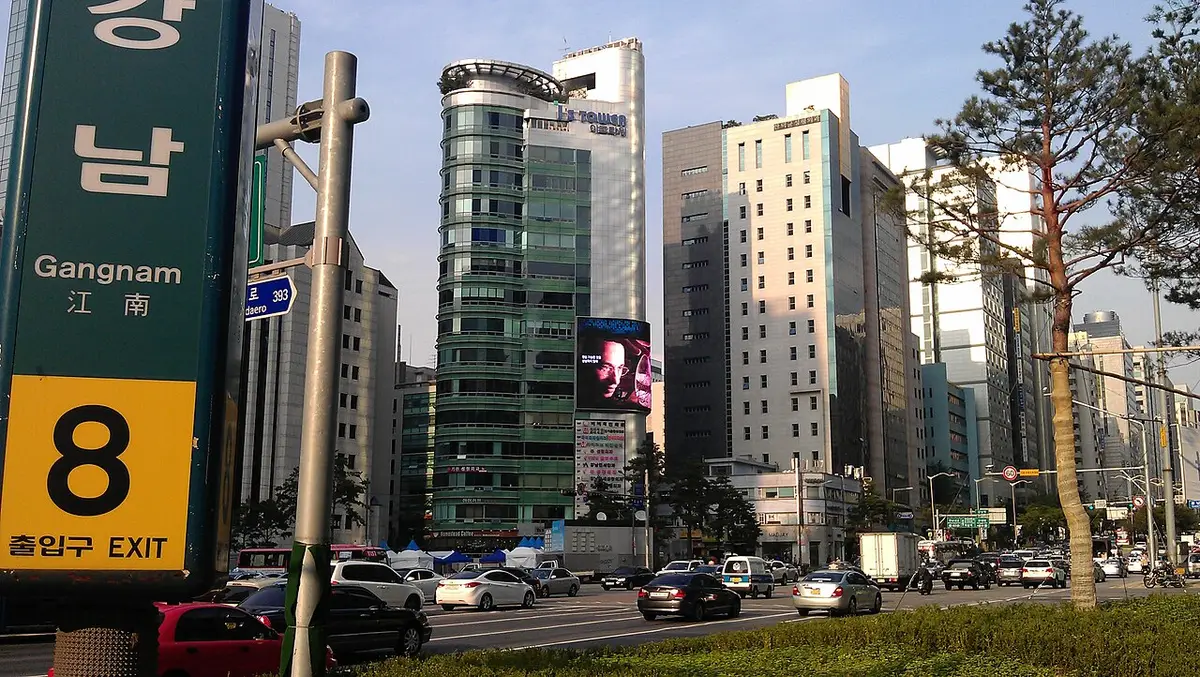
These are tendencies that follow from rents and building types, not rules, and every area has exceptions.
- Gangnam Station to Sinnonhyeon: office towers along Gangnam-daero suit clinics that need several floors — operating rooms, recovery rooms, a consultation floor with interpreters. Dermatology and laser clinics with walk-in style menus are dense here, as are dental and eye clinics serving office workers
- Sinsa and Garosu-gil: lower buildings on side streets. Mid-sized surgical clinics, dermatology practices and dental clinics, often occupying a whole small building
- Apgujeong and Cheongdam: the longest-established cluster, stretching along Apgujeong-ro and the streets off it. Many small practices built around one or a few surgeons, alongside skin clinics aimed at a local clientele
- The big general and university hospitals — the ones you would use for a health checkup or serious illness — are spread across the city. A few are in the wider Gangnam area, but none of these three pockets is a hospital district
Practical note: Gangnam-gu Office runs a public information desk, the Gangnam Medical Tour Center, on the ground floor of the Gangnam Tour Information Center on Apgujeong-ro, near Apgujeong Station (Line 3) and Apgujeong Rodeo Station (Suin-Bundang Line). Its site says it introduces institutions but does not provide medical services, and lists weekday hours of 10:00–18:00. It is a district office service with partner clinics, so treat its list as a directory, not a ranking.
#What the address does not tell you
- Rent is high in all three, and a prestigious address is a marketing cost that ends up in the price; it is not a quality certificate
- Big clinics and tiny ones exist in every area. Size tells you about systems (on-site anaesthesiologist, recovery rooms, interpreters); it says nothing about any one surgeon
- Clinics move and rename. Confirm the current address with the clinic itself, not with a map pin from an old blog post
- A clinic's registration as a foreign-patient-attracting institution is a legal status you can ask about. It matters more than the neighbourhood
#Reading the sign: specialist name or listed field
Korean signboards carry one piece of information that is regulated. Article 40 of the Enforcement Rule of the Medical Service Act allows a clinic to insert a recognised specialty between its own name and the word for clinic (의원), so a name ending in 성형외과의원 (plastic surgery clinic) or 피부과의원 (dermatology clinic), where the person who opened it is a specialist (전문의) in that field. A clinic whose name ends in plain 의원, with fields such as 성형외과 or 피부과 listed separately in smaller type as 진료과목 (fields treated), offers that work but is not claiming a specialist founder.
Practical note: Ask for the clinic's full Korean name, not only the English brand, and look at the last few characters. Either way, ask who will actually treat you and what that doctor's specialty is. The sign speaks for the founder, not for every doctor on the staff.
Verify before you rely on this: Whether a clinic is registered to treat foreign patients can change from year to year. Ask the clinic for its registration number and check it through Medical Korea rather than relying on a logo on a website. Medical Korea states that registered institutions have had to carry malpractice liability insurance since 2016; the guide on reading a Korean clinic quote explains what that cover does. Transport fares and routes change too: the Seoul Metropolitan Government lists the adult subway base fare as 1,550 won by card (as of 28 June 2025).
#Getting there from the airport
From Incheon International Airport. Check current routes and times before you fly.
| Option | How it works | Suits |
|---|---|---|
| Airport limousine bus | Direct coaches to stops along the main Gangnam roads. VisitKorea notes you must buy a ticket before boarding at the airport — counters on the arrivals floor of Terminal 1, and in the Terminal 2 transport centre. Search routes by destination on the airport's site | Most arrivals with luggage: no transfers, a seat, stops near many hotels |
| Airport Railroad (AREX) plus subway | Train to Seoul Station — about 43–51 minutes by express, 59–66 by all-stop train according to VisitKorea — then a subway transfer south across the river | Light luggage, daytime, anyone avoiding road traffic |
| Taxi | Standard, deluxe, jumbo and international taxis from the ranks outside arrivals; international taxis with foreign-language service are reserved in advance | Late arrivals, groups, and the trip home when you would rather not be seen on a bus |
| Late-night bus | Night routes marked N run to a limited set of Seoul stops, including Gangnam Express Bus Terminal | Flights landing after the regular buses stop |
For the return journey after surgery, plan the taxi or the bus stop in advance and allow for Gangnam's evening traffic. Some clinics include an airport pick-up in their foreign-patient service and some charge for it; ask, and ask who the driver works for.
#Choosing where to sleep
- Stay within a short taxi ride or a flat walk of the clinic; after surgery you will make the trip several times, swollen, possibly in a mask and hat
- Subway stations here are deep, with long transfers and stairs. Fine before surgery; less fine on day two
- If you are consulting at several clinics before choosing, Sinsa is one or two subway stops from both of the others, which keeps every trip short
- Airport limousine buses stop along the main Gangnam roads. Check the stop nearest your hotel before booking rather than after
Where to stay relative to your follow-ups
| Your trip | Follow-up pattern | What that means for the hotel |
|---|---|---|
| Consultations at several clinics, nothing booked yet | Three to five visits across two or three days, in different areas | Central to all three — around Sinsa — or near whichever station your shortlist clusters around |
| Surgery with stitches or a splint to remove | Procedure day, a check within the first days, removal about a week in, a final check before flying | Walking distance or a five-minute taxi from the clinic for the first week. Move somewhere cheaper or livelier afterwards if you like |
| Laser or injectable course | Two or three short visits, little downtime | Anywhere on Line 2, Line 3 or the Shinbundang Line; you will be well enough to ride the subway |
| Dental or eye procedure | Next-day check, then one more before leaving | Near the clinic for the first night, when vision or numbness makes travel awkward |
Practical note: Gangnam-daero and the streets behind it are steeper than they look on a map, and the pavements are crowded from late afternoon. A hotel that is 'ten minutes from the station' can mean ten minutes uphill through a crowd. Street-view the actual route between the hotel door and the clinic door before you book.
#A consultation day across the three areas
- Before the tripShortlist clinics yourself, confirm each one's current address and registration, and book consultation slots by email or messenger. Group them by area so that one morning covers one neighbourhood.
- MorningTwo consultations in one area. Allow ninety minutes each: waiting, photographs or scans, the consultant, then the surgeon or doctor.
- MiddayMove once, by subway if nothing has been done to you yet. Eat before the afternoon slot; consultations overrun.
- AfternoonOne or two more consultations. Ask each clinic for its quote in writing before you leave the building.
- EveningCompare the written quotes at the hotel, not in a consultation room. A deposit paid on the spot to hold a discount is the decision you are most likely to regret.
#Questions to ask a clinic about location and logistics
- What is your current street address and floor, and which subway exit is closest?
- Is the operating room in the same building as the consultation room, or will surgery happen at another site?
- Does the building have a lift from street level, and is there a drop-off point for taxis?
- How many follow-up visits should I plan, and on which days after the procedure?
- Is airport pick-up or a ride back to the hotel after surgery included in the quote, or charged separately?
- Which hotels within walking distance do your overseas patients tend to use, and do you receive a commission from any of them?
- What is your registration number as an institution treating foreign patients?
- Who do I contact at night if there is bleeding or severe swelling, and where would I be sent?
Location extras in a quote
- Sometimes included: airport pick-up, a ride to the hotel after surgery, an interpreter during visits, post-operative swelling care sessions
- Usually not included: the hotel itself, taxis to follow-up visits, a companion's costs, a changed flight
- A 'package' that bundles a hotel is convenient but hard to compare. Ask for the medical items and the travel items as separate lines
Outside busy subway exits in these areas you may be approached by people offering to take you to a clinic with a discount. Unregistered brokering of foreign patients is illegal in Korea, and the commission comes out of your bill. Choose clinics yourself and contact them directly.
#Common questions
Which area of Seoul is best known for plastic surgery?
Gangnam-gu as a whole. Inside it, Apgujeong and Sinsa are the older cluster and the Gangnam Station to Sinnonhyeon strip is the larger, newer one. No area is medically better than another; the difference is in building size, street feel and hotel prices.
Is Gangnam the same as Gangnam Station?
No, and the confusion costs people long walks. Gangnam-gu is a large district that contains all three areas on this page. Gangnam Station is one subway station near its western edge. A clinic that says it is 'in Gangnam' may be closest to Sinsa, Apgujeong, Sinnonhyeon or somewhere else entirely; ask for the nearest station and exit number.
Should I stay in Gangnam or in Myeongdong or Hongdae?
For a surgical trip, stay near the clinic for at least the first week. Myeongdong and Hongdae are north of the river; the trip involves a transfer or a long taxi ride through traffic, which is tolerable before a procedure and unpleasant after one. For skin treatments with little downtime, it matters much less.
How far apart are Gangnam Station, Sinsa and Apgujeong?
A few subway stops. Sinsa and Apgujeong are adjacent on Line 3. Sinsa and Gangnam Station are joined by the Shinbundang Line via Sinnonhyeon. By taxi, any pair is a short ride when the roads are clear; at rush hour the subway is usually faster if you are fit to use it.
Does 'plastic surgery' on a Gangnam sign mean a plastic surgeon?
Only if it is part of the clinic's name. Under Korea's rules on clinic names, 성형외과의원 in the name signals a founder who is a plastic surgery specialist; 성형외과 listed as a field treated under a name ending in plain 의원 does not. Ask about the operating doctor either way.
Sources
- Medical Korea — foreign patient information portal
- VisitKorea — Korea Tourism Organization
- Seoul Metropolitan Government — English site
- Medical Korea — registration system for institutions treating foreign patients
- Gangnam Medical Tour Center — run by Gangnam-gu Office
- VisitKorea — airport transportation guide
- Korean Law Information Center — Enforcement Rule of the Medical Service Act, Article 40 (how clinic names may be displayed; Korean)
- Incheon Airport — bus route search
- Seoul Metropolitan Government — subway fares
Planning the trip? Tick off the trip checklist — what to get in writing, what to pack and which documents to collect before you fly home — and keep the Korean phrase cards on your phone for taxis and pharmacies.
This site is an information resource, not a medical provider, agency or broker. We do not arrange treatment, refer patients to specific hospitals, or receive commission from clinics for introductions. Nothing here is medical advice — decisions about treatment belong to you and a licensed doctor.